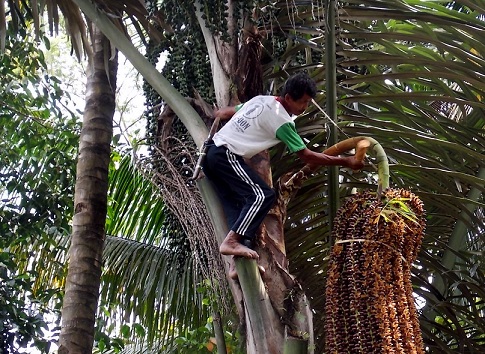
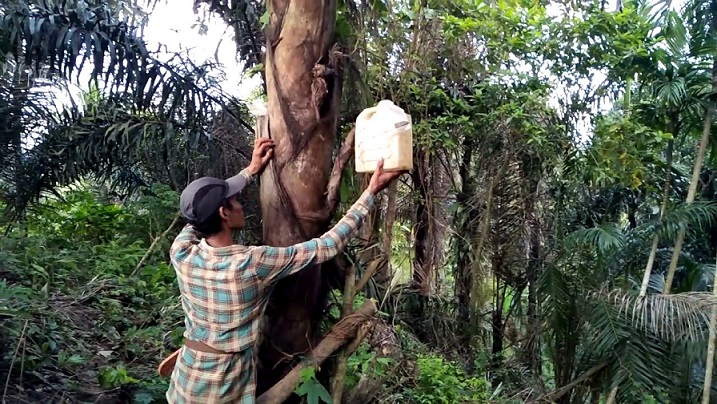
Coconut sugar is a natural sweetener that comes from the sap of the coconut tree Cocos nucifera called Manggar. Coconut sap is a clear liquid that comes out of the coconut flower whose buds have not yet opened and is obtained by tapping. This liquid is the raw material for making sugar. When it is fresh, the sap has a sweet taste, smells fragrant, and is colorless. Coconut sugar is a healthier alternative to granulated sugar (cane sugar) because it has a lower nutritional content and glycemic index than granulated sugar (cane sugar).
The sweet taste of coconut sap is caused by its high sucrose content. The sucrose content of fresh coconut sap is 14% (according to measurements by Xia et al, 2011), while measurements by Barh and Mazumdar (2008) found a sucrose content of 9.3 grams per 100 ml of fresh coconut sap.
Source
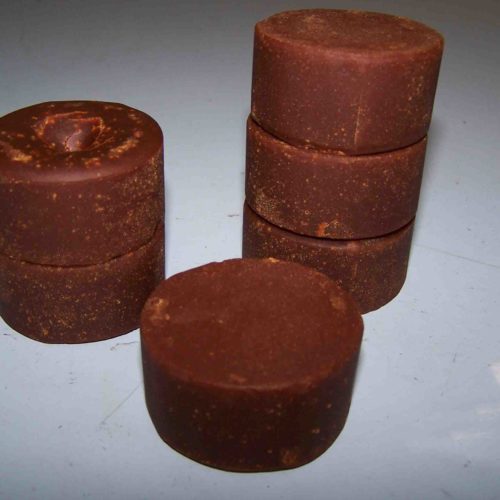
Coconut sap that has been tapped from the sap of coconut flowers, cooked at high temperatures until most of the water evaporates and turns into a very thick consistency which is then poured into molds and allowed to cool to form solid/molded coconut sugar. The shape of solid/molded coconut sugar varies, such as the shape of half a coconut shell (batok) or a cylindrical shape.
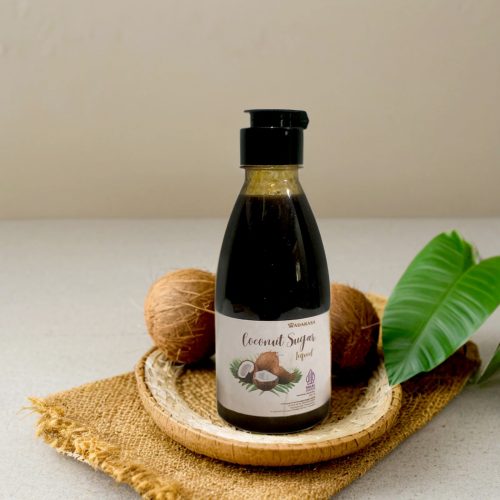
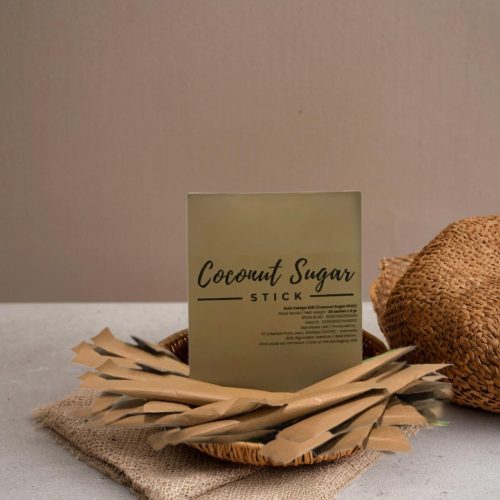
In addition to coconut sugar which is produced in solid form, coconut sugar can also be made in liquid form, where the coconut sugar is cooked at high temperatures until it becomes thick like syrup and processed into crystal form (palm sugar) where the process is to heat the coconut sap at high temperatures until only the sugar from the sap remains.
Characteristic
Taste
Coconut sugar has a rich, smooth caramel-like taste with a distinct coconut aroma.
Texture
Liquid coconut sugar has a thick syrup texture.
Molded coconut sugar has a solid texture
Palm sugar is available in fine or coarse granular form, resembling brown sugar, with a fineness level of between 10 – 20 mesh.
Color Gula kelapa memiliki warna coklat keemasan hingga coklat tua.
Benefits:
Natural Processing: Coconut sugar is processed naturally, without using additional chemicals that are harmful to health.
Keberlanjutan: Ramah lingkungan, saat pemanenan nira/kapur kelapa tidak membahayakan pohon, dimana pohon kelapa akan terus menghasilkan nira kelapa setiap hari dan sumber daya lainnya.
Adds taste: Coconut sugar tastes like caramel and has a distinctive coconut aroma so it can improve the taste of food, bread and drinks.
Gula Kelapa memiliki indeks glikemik yang lebih rendah (35-54) dibandingkan dengan gula biasa (GI ~65), yang berarti dapat menyebabkan peningkatan kadar gula darah lebih lambat. Namun, dampak glikemik bervariasi antara setiap orang dan harus dipertimbangkan bersama dengan total konsumsi gula.
Coconut sugar contains high vitamins and minerals, potassium, magnesium, calcium, zinc, and iron. Coconut sugar also contains Vitamins B1, B2, B3, and B6. Coconut sap processed into coconut sugar contains 16 amino acids, the highest amino acid content is Glutamine.
Uses :
Coconut sugar is generally used as follows:
Coconut sugar as a substitute for white sugar or brown sugar used in most recipes
Coconut sugar is used in various Indonesian dishes to add aroma and flavor.
Coconut sugar as a natural sweetener for various drinks such as coffee, tea, traditional drinks or milk
Coconut sugar is also often used in making cakes and bread.
Coconut sugar as the main ingredient for making soy sauce, spices or sauces


 EN
 ID